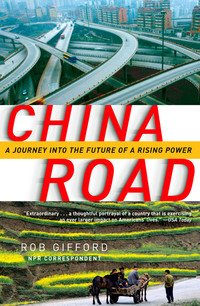
This week I’ve read through Chapter 3 and found many interesting topics. In the first chapter a statement drew my eye in the text, which stated, “There is a growing gap between the urban rich and the rural poor, and this has led to many incidents of unrest in rural areas. The old safety net of free health care and cradle-to-grave provision by the state has collapsed, and this has left a lot of people much worse off than before.” This quote reminded me of a conversation I had with my father at the dinner table. My father, while living here in Beijing, made a good friend through church. One day he had told my father he made up a rap about Beijing and the lifestyle here. The rap was through the eyes of a foreigner. My father accepted to film all the footage for the music video. One of the verses talks about migrant workers. So, they went to a migrant worker’s home and shot some video footage. That night during dinner my father discussed what he had seen and observed. As I listened to him, I felt as if I was there experiencing it with him. He said, “These migrant workers make about 6,000RMB to 8,000RMB a month (952-1,259USD). Their rent of 500RMB (80 USD) every month consists of a room with no kitchen, no bathroom and no sink.”
http://www.flickr.com/photos/niffgurd/sets/72157630064724899/: My father’s post about the Migrant worker
This statement caused me to think about all the other obstacles these migrant workers and their families have to experience everyday. Their children go to a migrant school, which is illegal because they have no Hukou. They also have no health care, and yet they leave what they have behind for something they believe to be better. When I return home from school each day I pass by the migrant workers housing and see them on the construction site hard at work. You can see how much their job takes a toll on their bodies. They work hard for what they earn and yet they do not receive benefits such as the needed city registration and health care.
The second issue I would like to point out is the conversation Rob Gifford had with Ye Sha, a host of a radio show in Shanghai. As Gifford sat down with her, Ye Sha made a comment about Chinese life, she said, “The previous pace of life was too slow, for sure. But now it’s too fast. In traditional China, people were taught zenme zuo ren, how to be a person. In fact, we emphasized it too much. The morality, the rituals, the ethics. Now it isn’t emphasized enough. No one knows how to be a person anymore.” Beijing is constantly changing, within month’s new shops and buildings are being built. Each day is a quest for improvement in order for everything to appear perfect. As stated by Rob Gifford, “Shanghai blinds the visitor to what lies beyond.” This statement is in reference to all of China, not just Shanghai. Ye Sha brought this topic up many times in her interview with Rob Gifford, stating that many teens feel lost because of the lack of morals being taught to them. Gifford stated that the children of China are being “raised as technicians.” This reminds me of a child I tutored last year. He went to school all day and then I tutored him for another two hours. This child was only 4 years old and he never was able to keep his attention on the lesson. The lack of focus was because his mother put him in school all day. Education is very important, but so is learning ethics, morals and rituals, which some Chinese citizens’ feel has been taken away from their country.